
Less HYPE. BETTER SKIN.

An Esthetician's Perspective
By Alexia Ehrsam
Somewhere along the way, skincare became waaay more complicated than it ever needed to be. We've gone from washing our faces and putting on moisturizer to layering seven different serums, only to wonder why our skin is freaking out. Between 12-step routines, ingredients we can barely pronounce, and a new miracle product going viral every other week, I can totally understand why people are confused.
Now don't get me wrong, I love unboxing a new serum in a cute little bottle just as much as the next girl. But after nearly a decade working as an esthetician, and now teaching the next generation of skin professionals, I've learned a thing or two about what actually makes skin healthy. And spoiler alert: it has a lot less to do with how many products you're buying and a lot more to do with understanding what your skin actually needs.
Along with my esthetics license, I have a degree in media communications, so I've seen both sides of the beauty industry. I understand the science behind skincare, but I also understand how easily clever marketing can turn a pretty ordinary product into something that sounds life-changing.
And while I appreciate some good marketing, I think we've made understanding skincare a whole lot harder than it needs to be.
So, let's cut the fat and get down to what actually matters.
Define "Good Skin."
Pores? Normal. Texture? Normal. The occasional breakout? Also normal.
Somehow, we've convinced ourselves that completely normal skin features are flaws that need fixing. And honestly, I think that's a big part of why so many people feel like their skin is never good enough.
When I'm looking at someone's skin, I'm not expecting perfection. I'm paying attention to how it's actually functioning. Is it hydrated? Is the skin barrier doing its job? Is there irritation or inflammation throwing things off?
I'm also looking at the bigger picture, because everyone's skin has a story. Lifestyle, habits, hormones, stress, and the products you're using at home all help paint that picture. Sometimes your skin is just along for the ride.
And that healthy glow everyone wants? It's usually not as complicated as the beauty industry would have you believe. Hydration, barrier support, appropriate exfoliation, and sunscreen can go a long way. No 12-step routine required.
Something I always remind people is that your skin is an organ. A pretty impressive one, actually. Its job is to protect you, regulate your temperature, and keep the outside world where it belongs. Looking flawless under fluorescent bathroom lighting was never part of the job description.
Personally, I think we could all give our skin a little more credit for doing just that.
Sometimes, You're Your Skin's Own Worst Enemy
Hold my hand when I say this... Sometimes your skin doesn't need another product. It just needs you to leave it alone.
I remember having a client come in who was struggling with persistent grade 2 acne. They were frustrated because no matter what they put on their skin, nothing seemed to help. Naturally, my first question was, "Well, what are you using?"
An acne cleanser, Stridex pads, a salicylic acid serum, and absolutely no moisturizer. My skin barrier practically cried just hearing that.
During their skin analysis, I noticed quite a bit of sensitivity alongside the breakouts. They had gotten so used to the idea that "if it's burning, it's working" that irritation had become part of what they considered normal skincare. In reality, their routine was likely disrupting their skin's protective barrier and contributing to that sensitivity.
We also talked about lifestyle and eating habits, including foods they suspected were contributing to their breakouts. But rather than adding another acne treatment, I encouraged them to put the actives down and give their skin a chance to recover.
Once things settled, we introduced a simpler routine: a gentle cleanser, moisturizer, and enzyme exfoliation once a week.
After about three months, the difference was night and day. They no longer described their skin as sensitive, and their breakouts had become much less frequent, aside from the occasional hormonal breakout around their cycle.
But it didn't happen overnight. Healthy skin takes time, consistency, and patience. The hardest part wasn't finding the right products. It was breaking old habits and realizing that doing less didn't mean they weren't doing enough.
Sometimes the best thing you can do for your skin is give it a break.
Ingredients Worth Knowing (Without the Chemistry Degree)
Call me a nerd, but I genuinely love reading skincare ingredient labels. I like knowing what's in a product, why it's there, and what it's actually supposed to do for your skin. I've probably spent more time than the average person trying to memorize ridiculously long ingredient names, and yes, I actually find that fun.
But I realize not everyone wants to spend their free time decoding ingredient lists like they're studying for a chemistry exam.
You just want to know what works, why it works, and whether it's worth putting on your face. Luckily, I've done some of the homework for you.
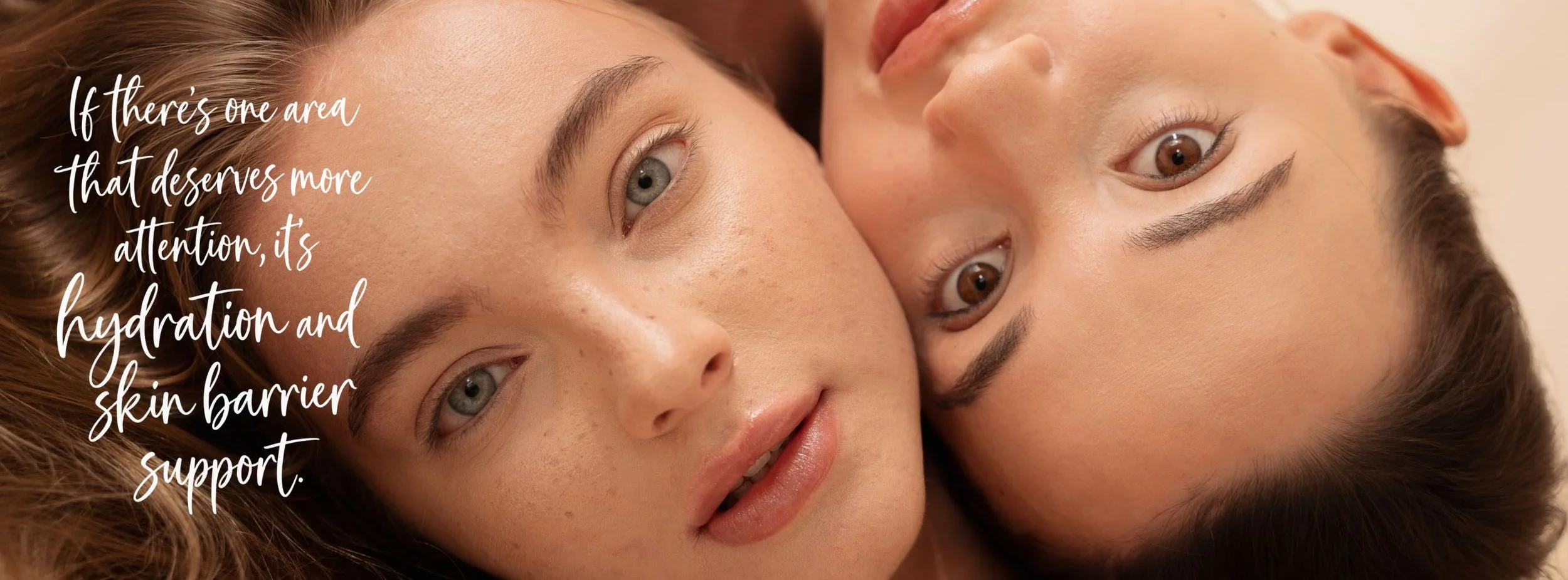
If there's one area that deserves more attention, it's hydration and skin barrier support.
Think of your skin barrier as your skin's built-in security system. It helps keep moisture in and unwanted irritants out. When it's not functioning properly, you might notice dryness, tightness, flaking, or increased sensitivity. And no, the solution isn't always to scrub the problem away.
Here are a few ingredients worth keeping on your radar:
Hyaluronic Acid: A humectant, which is just a fancy way of saying it attracts and binds water. It helps hydrate the skin and can temporarily make it look smoother and plumper.
Polyglutamic Acid: Another hydration helper that attracts and retains water at the skin's surface. It works well alongside hyaluronic acid, and despite the word "acid," it isn't an exfoliant.
Ceramides and Emollients: Think of these as your skin's support team. Ceramides help maintain the skin barrier, while emollients soften and smooth the skin.
Here's where it all comes together. Humectants attract water, emollients soften the skin, and occlusive ingredients help slow down water loss.
And here's the best part: You don't need a separate serum for every ingredient. I know. Shocking.
A good formula can accomplish several things at once. Good skincare isn't about how many ingredients you can fit into your routine. It's about knowing which ones actually belong there.
Let's Get Back to Basics
Let's say you came into my treatment room and told me, "I just want better skin. Where do I even start?"
First, I'd ask a few questions about your skin, what you're currently using, and what you're hoping to improve. Because contrary to what social media might suggest, there isn't one magical routine that works for everyone.
But if we're starting from scratch, I'd keep things pretty simple.
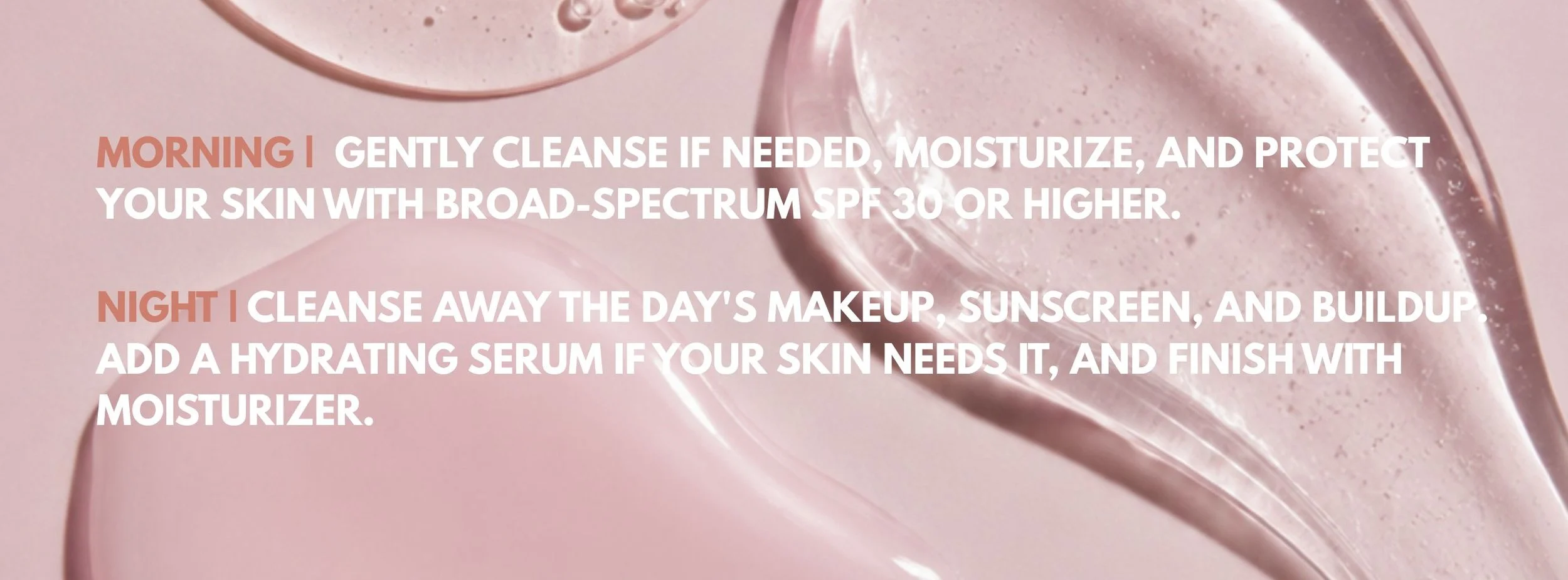
In the morning: Gently cleanse if needed, moisturize, and protect your skin with broad-spectrum SPF 30 or higher.
At night: Cleanse away the day's makeup, sunscreen, and buildup. Add a hydrating serum if your skin needs it, and finish with moisturizer.
That's your foundation.
Not particularly glamorous, I know. But neither is brushing your teeth, and we still do that every day because it works.
Once you've got the basics down, we can start talking about targeted ingredients for concerns like acne, pigmentation, or fine lines.
But please, introduce one thing at a time. Your bathroom counter doesn't need to look like a chemistry lab for your skincare routine to be effective.
Understanding Your Skin Beats Collecting Skincare
If there's one thing I've learned from working with clients and teaching future estheticians, it's that skincare is just as much about education as it is about products and treatments.
I can give someone a great facial. I can recommend products and explain ingredients all day. But if they don't understand why they're using something or how it fits into their routine, we're missing a pretty important part of the process.
And that's something I wish more people understood about skincare professionals. I'm not here just to sell you another serum or convince you that you need the latest treatment. I'm here to help you understand your skin so you can make informed decisions about what you're putting on it.
Personally? I've never been all that impressed by a well-edited TikTok ad. I'm much more interested in what's inside the bottle and whether the formula actually makes sense for your skin.
Don't get me wrong, I love seeing how much the beauty industry has grown. The science, the innovation, and the confidence someone can gain when they start feeling better about their skin? That's what makes this industry so exciting to me.
But somewhere in all that progress, I think we've started confusing having more options with needing more products. And I'd love to see us change that conversation.
Your skin is going to change. Hormones, stress, weather, aging, and life in general are all going to have their moments. Even with a great routine, you're still going to have days when your skin isn't cooperating.
And that's normal.
So before you buy that next viral serum, take a look at what your skin actually needs. Keep your routine simple, protect your barrier, wear your sunscreen, and give your products a chance to do their job.

Alexia Ehrsam is a licensed esthetician and educator based in Toledo, Ohio, with over nine years of experience in the beauty and wellness industry. With a background in skincare education, client care, and communications, she brings a fresh, no-nonsense perspective to beauty, helping people better understand their skin and cut through the noise of skincare trends.
Because sometimes the secret to really good skin isn't doing more. It's knowing when to do less.
