
Rest in Peace, Anti-Aging
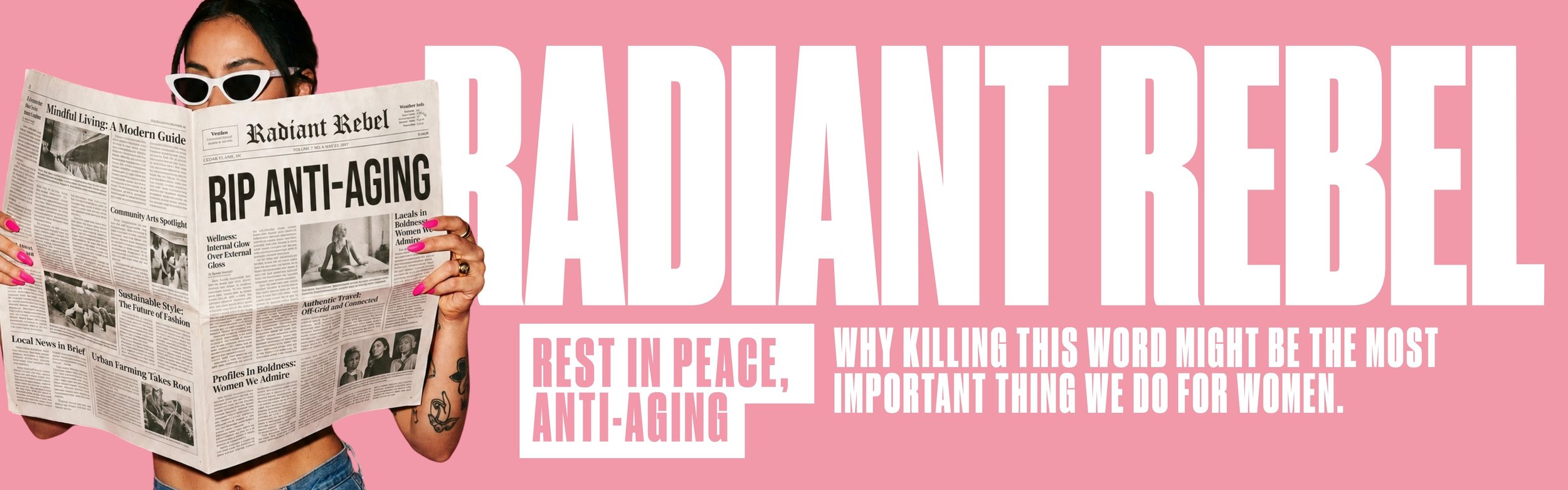
Why killing this word might be the most important thing we do for women.
Damn girl. Nobody wakes up hating their skin. Somebody teaches them to.
Anti-aging didn't start with Botox. Or retinol. Or a $90 serum promising to rewind your face like a VCR tape. (If you don't know what a VCR tape is, take your perky little boobies out on the town tonight — you clearly don't need to worry about this yet.) It started way earlier than that — with the idea that a woman's appearance was tied to her value. Her desirability. Her ability to stay visible in a culture that has always liked youth more than it likes women.
The Sell Is Older Than the Science
People have been oiling, powdering, and masking their skin for centuries. Fine. Normal. Human.
But by the late 1800s, beauty got packaged. Marketed. Sold at scale. Suddenly a cream could promise to fade your freckles, soften your sun damage, and preserve your youth — all in one jar.
Skin gets dry. Sun changes it. Wanting to feel good in the mirror? Not the problem.
The problem was never the skincare.
The problem was the story stapled to it.
Somewhere in there, aging stopped being a normal part of being alive and started being treated like a personal failure. A woman who looked older wasn't just — older. She was behind. She'd missed the memo. Skipped a step. Ignored a warning. She had some correcting to do before anyone noticed.
Then Marketing Got Smarter
By the twentieth century, beauty advertising leveled up. It wasn't selling lipstick anymore. It was selling the hold — staying fresh, polished, desirable, untouched. A woman frozen at her most marketable moment.
Then science showed up.
And to be clear — real breakthroughs happened. Sunscreen. Prescription retinoids. A genuine, useful understanding of collagen, pigmentation, and how skin actually changes over time. Good tools. Real tools.
But somewhere between the lab and the ad campaign, those tools got folded into a much bigger promise:
That getting older could be managed away. Like a bad habit. Like a stain.
That's the moment "anti-aging" stopped being a shelf category and became a mindset.
The Word Itself Has a Birth Certificate
"Anti-aging" isn't ancient. It's not even that old. The phrase really took off in the '90s and exploded through the 2000s — right as skincare and cosmetic procedures started merging into one giant, glossy industry.
Somewhere in a boardroom, someone figured out that "moisturizer" doesn't sell nearly as hard as "here's the solution to the thing you should be worried about." So aging got reframed. Not as a thing that happens to every person lucky enough to keep living — as a flaw. Something with a fix, if you just found the right serum, the right routine, the right amount of vigilance.
And once something gets framed as a problem, it needs a constant stream of solutions to sell. That's not really a skincare economy. That's an economy built on quiet, low-grade worry.
Don't believe it? Here are the receipts.
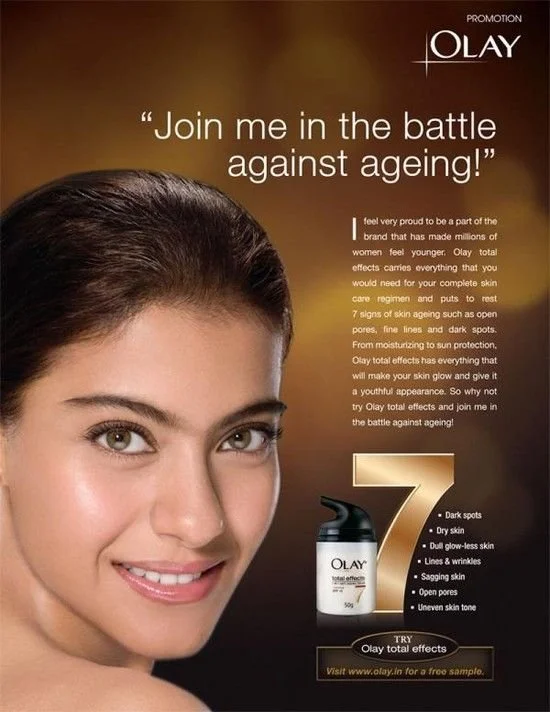
One Olay campaign told women to join the "battle against ageing" — with a checklist underneath like dark spots and sagging were symptoms of a diagnosis nobody asked for.
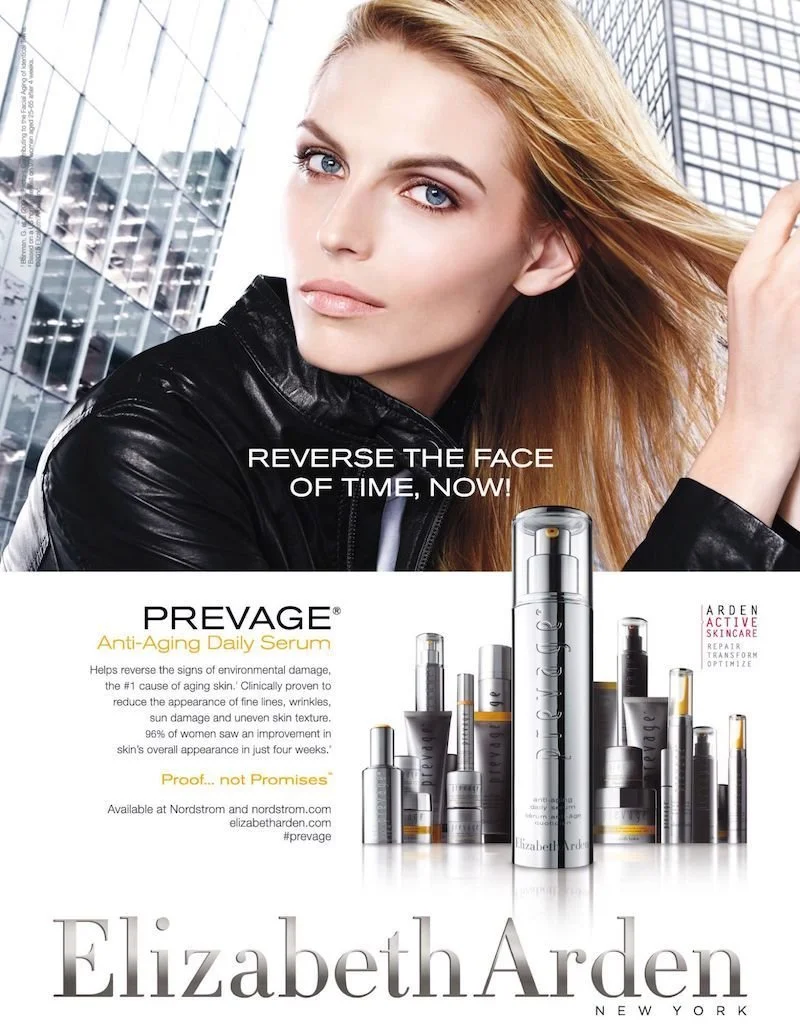
Elizabeth Arden skipped subtlety entirely and promised to reverse the face of time — not soften it, not manage it. Reverse it. Like time was a typo you could delete.
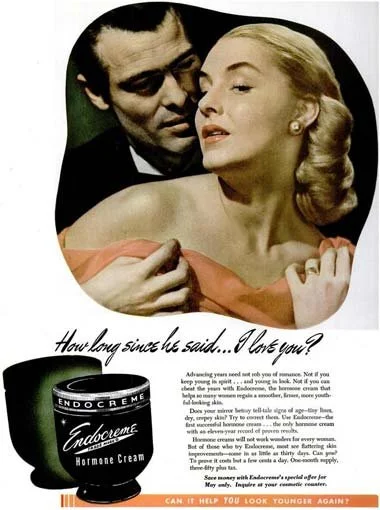
And in 1948, one ad didn't even bother with a science pitch. It went straight for the heart: how long since he said "I love you"? One line, and suddenly your skin isn't a cosmetic choice — it's the reason you're not being loved correctly.
Three different decades. Three different brands. One identical undertone: something is a little wrong with you, we already know what it is, and it's going to cost you something to fix it.
That's not skincare. That's a script.
Say the Phrase Out Loud
Anti-aging.
Against aging. Aging as the enemy. As if the goal was never to take care of the skin you have — it was to fight the person you're becoming.
Here's the thing though: wanting glowing skin is completely fine. Book the facial. Use the good moisturizer. Try the treatment. Wear the makeup. None of that is under attack here.
This isn't about pretending we don't care how we look.
It's about asking who taught us that every visible sign of a life actually lived needs correcting.
Here's the Part the Industry Doesn't Say Out Loud
Anti-aging was never a real category. It was a promise nobody could actually keep — because aging isn't a malfunction. It's not a bug in your skin that the right serum fixes. It's the thing that happens when you're alive long enough to have a face worth looking at.
So the "anti" part was always a con. A beautifully lit, well-funded con — but a con.
Anti-aging is dead. And it's about damn time.
And no, we're not just talking about swapping the label for something trendier either. Half the industry right now is quietly renaming "anti-aging" to "longevity." Same fear. Nicer font. Same shelf of promises to slow a clock nobody asked to race. We're not giving the old idea a new word. We're done with the idea entirely.
None of that means throw the science out with the marketing, though. It means point the science somewhere honest. There's real, legitimate research on collagen support, barrier repair, pigmentation, hydration, sun protection — dermatology that doesn't need a fear campaign attached to work. That's not "anti-aging." That's just skin science. It doesn't promise you'll look 25 forever. It just helps the skin you're actually living in do its job better.
Here's the actual idea, in one sentence: your skin isn't a problem to fix. It's something to feel good in.
Tremella mushroom doesn't check your ID. Polyglutamic acid doesn't care how old you are. Good hydration is good hydration at twenty-five, forty-five, and eighty-five. The ingredients were never the problem. The story wrapped around them — the dread, the reverse, the how long since he said I love you — that's the only thing we're actually trying to change.
That's the shift we're standing behind: not a rebrand. A refund on the lie, backed by the receipts.
That's Radiance Without Rules. Not a nicer version of the old story. A completely different one.
What We Get to Celebrate Instead
That line by your mouth? Twenty years of laughing with the friends who actually got you. The crease between your brows has watched you concentrate, worry, figure things out, get it done. Your skin isn't a record of damage. It's a record of a life you actually got to live.
Your face is the cover of your favorite book — the one you've read a hundred times, the one you hand to people you love because you want them to know you. It's got creases from being opened so often. That's not wear and tear. That's how you know it's been loved.
A few honest ways to actually live that out:
Notice the language on the shelf. Corrects. Reverses. Fights the signs of. You're allowed to clock it — and you're allowed to opt out of the worry it's selling.
Choose care from love, not fear. Serum, facial, Botox — the products were never the issue. Just ask whether you're reaching for it because you want to, or because something told you to be scared.
Be here for this version of you. 22 or 62, you're not in a waiting room for a better one to show up later. This is it.
Chase vitality, not youth. Glow, calm, strength, resilience — your skin can have all of that at every age. That's the actual flex.
Catch yourself auditing, and stop. Your reflection at 2am under bathroom lighting is not a reliable narrator.
There's a difference between caring for your face and being at war with it. That's the real shift. Not less care. Just a completely different reason for it.
Because it will change.
That's not the problem.
That's the whole glow-up.
SO? The years ahead aren't something to brace for. They're just more life, more proof, more you. Take care of your skin because you like being in it. Go be thirty, fifty, eighty — like it's something you're lucky to do, not something you have to survive.
And to whoever's still out there trying to sell us the cure — kiss my aging ass.
xo Shelley
skincare · radiance without rules · aging gracefully · anti-anti-aging · healthy skin
