
What’s Beauty Anyway?
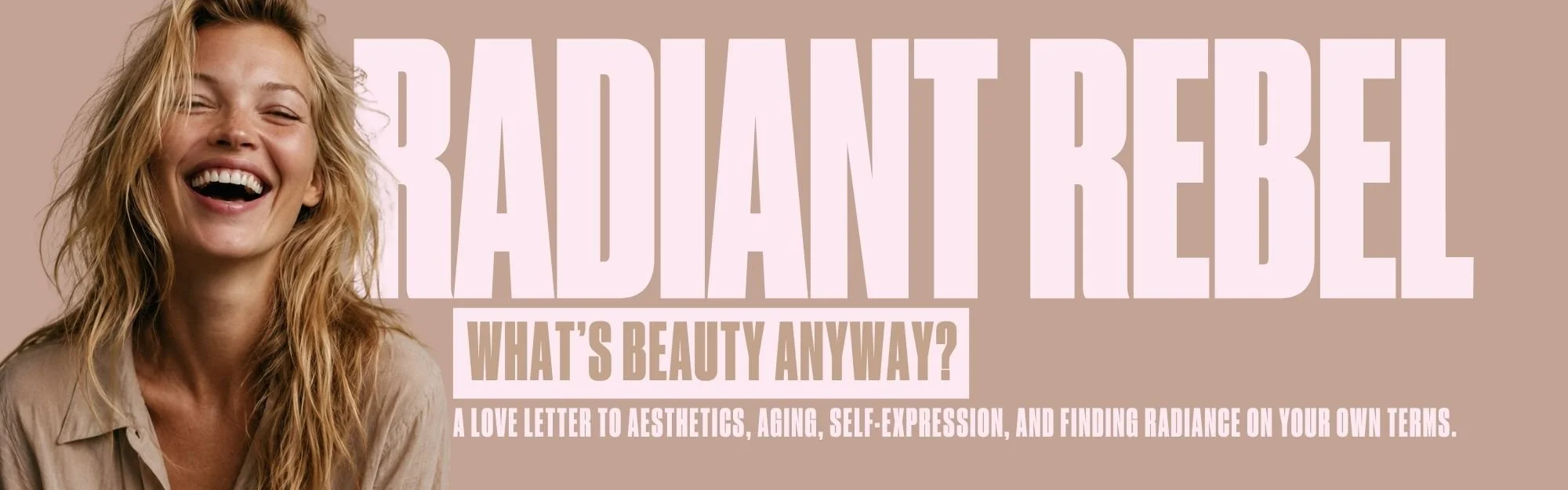
What Does It Mean to Be Beautiful?
I used to wonder why beauty mattered so much to me.
For a long time, I thought maybe it meant I was shallow. I remember sitting in therapy once, almost embarrassed by how much I cared about aesthetics. Why did visual harmony affect me so deeply? Why did color, symmetry, texture, style, and atmosphere feel emotional to me instead of superficial?
But the deeper we dug, the more I realized something important: beauty was never just vanity to me. It was language. I’m an artist. Beauty is one of the ways I process the world.
Some people hear music and feel transformed. Some people read poetry and cry. I notice that morning light feels different than 5 p.m. grocery store light. A fluorescent room can feel emotionally exhausting without anyone realizing why. I notice how dusty blue beside faded pink feels nostalgic. How red lipstick in a grey room changes the entire emotional tone of an image. I notice texture and imperfection. Cracked paint. Wrinkled linen. Smudged eyeliner. The beauty in things that look lived in instead of polished. Composition in everyday life. A coffee cup left beside an open book. A woman smoking outside a convenience store in leopard print slippers. A child asleep in the backseat under sunset light. Artists mentally frame scenes constantly.
Aesthetic sensitivity isn’t superficial. It’s perceptiveness. It’s pattern recognition mixed with emotion. It’s noticing meaning in visual details.
That realization changed everything for me.
It also made me curious about why humans care about beauty in the first place. Aside from being an artist.
Scientifically, a lot of our early attraction cues were rooted in survival. Evolution favored certain traits because they signaled health and vitality. Facial symmetry, for example, was often associated with strong development and good genetics. Smooth skin could signal youth, health, fertility, resilience.
In many ways, our brains were built to scan for signs of wellness before we even understood why.
And honestly? That’s fascinating.
But somewhere along the line, we stopped appreciating beauty as information and started turning it into a hierarchy. Media, advertising, celebrity culture - they took these tiny evolutionary cues and amplified them into impossible standards. Suddenly aging became something to “fight.” Wrinkles became “flaws.” Women especially were taught that our value lived somewhere between looking youthful and being desirable.
And I think a lot of us internalized that without even realizing it.
What’s interesting, though, is that something shifts as we get older.
I remember being in my mid-thirties and having this funny realization one day walking down the street. I was suddenly in this weird age category where both the dad and the grown son were looking at me. And I remember thinking, wait… which one of you am I even supposed to impress anymore?
Then it hit me. Neither.
That was the beginning of freedom.
Because eventually, if you’re lucky, you start aging out of performing for the male gaze. At first it can feel uncomfortable. Women are conditioned from such a young age to feel watched, evaluated, ranked. But once that starts loosening its grip on you, something beautiful happens.
You start dressing for yourself.
You choose the weird glasses because they make you happy. You wear the oversized linen shirt because it feels like art. You stop asking if something is “flattering” and start asking if it feels like you. You realize confidence has absolutely nothing to do with looking twenty-two.
And honestly? That kind of beauty is so much more magnetic.
I think that’s also why comparison becomes so dangerous. Comparison disconnects us from ourselves. It makes us abandon our own uniqueness in pursuit of someone else’s blueprint.
“Comparison is the thief of joy” sounds cliché until you actually experience it.
Because the moments I’ve felt most beautiful in my life were never when I looked the most perfect. It was when I felt the most alive. Laughing until I cried. Dancing in a kitchen. Working on a creative project I believed in. Holding my daughters. Falling in love. Building something meaningful. Feeling connected to myself.
That’s the kind of beauty I care about now.
And honestly, that philosophy became a huge part of why I created Electric Lemonade.
I didn’t want skincare rooted in shame. I didn’t want products designed to make women feel like they were failing if they aged. I also didn’t have the time or desire for a ten-step routine that felt like a part-time job.
I wanted skincare for real life.
Something effective, nourishing, beautiful, and easy. Something that fit into the messiness of being human. Staying up too late. Traveling. Stress. Motherhood. Creativity. Chaos. Joy. Real life.
That’s where “Radiance Without Rules” came from. Not perfection without wrinkles. Not youth at all costs. Not flawlessness.
Radiance. The kind that comes from caring for yourself because you value yourself - not because you’re trying to earn worthiness.
To me, beauty now feels less like something we achieve and more like something we honor.
It’s self-respect. It’s expression. It’s individuality. It’s health. It’s joy. It’s allowing yourself to evolve without apologizing for it.
So maybe the question isn’t “How do I stay beautiful?”
Maybe the better question is:
How do I want to feel in my own skin?
And maybe beauty begins there.
xo
Shelley
